
What Happens During an Oral Cancer Screening? A Dentist Explains Step-by-Step
Let’s be honest for a second. When you slide back into that vinyl dental chair for your regular checkup, you are probably bracing yourself for the usual checklist: scraping away stubborn tartar, checking off a few cavity free teeth, and talking about how well your daily flossing routine is actually going. Most of us don't walk into our appointments thinking about major health screenings.
Yet, tucked right into that standard visit is one of the most powerful, lifesaving steps your dental team performs: the oral cancer screening.
If you have ever wondered what your dentist is actually looking for while they peer under your tongue or gently press along your jawline, you are definitely not alone. Many patients assume it is just a random part of the exam, but every movement is intentional. Let’s walk through the exact steps of an oral cancer screening, why it matters so much, and what you can expect the next time you visit Palmer Dentistry & Implants.
Why This Simple Check Matters So Much
When people hear "oral cancer," it can feel heavy and frightening. The term covers cancers that develop across the lips, tongue, inner lining of the cheeks, the floor of the mouth, the palate, and back into the throat. Thousands of individuals receive these diagnoses every year.
The real challenge with oral cancer is its stealthy nature. In its earliest phases, it can easily hide behind symptoms that look identical to a harmless canker sore, a scratch from a sharp piece of food, or general mouth irritation. Because it sneaks up quietly, it is far too often caught in later stages after it has already had room to progress.
That is precisely why regular visits to Palmer Dentistry & Implants matter so much. Your dentist gets a clear look at hidden corners of your mouth, tongue base, and throat that you simply cannot view on your own in a bathroom mirror. Spotting minor shifts early gives you a massive advantage, keeping any necessary follow up or treatment remarkably simple compared to what you might face down the road.
Spotting the Early Warning Signs at Home
While your dental team handles professional evaluations during your visits, staying in tune with your own body between appointments is equally vital. Pay attention to how your mouth feels and looks, and schedule an appointment if you notice any of these red flags sticking around for more than two weeks:
- Stubborn Sores: A sore on your lips, gums, or inside lining that bleeds easily and just refuses to heal up.
- Unexplained Lumps: Any new thickening, hard spots, or rough patches on the soft tissues of your mouth.
- Unusual Color Shifts: Patches that look velvety white, bright red, or a speckled mix sitting on your tongue or gums.
- Lingering Numbness or Pain: Sudden, unexplained numbness, a loss of feeling, or a persistent dull ache anywhere in your mouth, face, or neck.
- Trouble Chewing or Swallowing: Feeling like something is constantly stuck in your throat, or running into strange difficulties when you move your jaw, chew, or swallow.
- Nagging Voice Changes: A hoarseness or sore throat that lingers for weeks without any sign of a cold, flu, or seasonal allergies.
It is worth keeping in mind that while heavy tobacco and alcohol use are well documented risk factors, oral cancer doesn't play favorites. Cases pop up regularly in individuals with zero lifestyle risk factors, including those tied to human papillomavirus (HPV). That is why universal screenings are strongly recommended for every adult, no matter your background or daily habits.
Step by Step: What Happens During the Screening
If you have never paid close attention to what happens during an oral cancer check, you might picture something clinical, complicated, or uncomfortable. Fortunately, it is entirely noninvasive, completely painless, and wrapped seamlessly into your regular dental examination.
Your dentist or dental hygienist handles the screening in two straightforward phases:
Step 1: The External Visual and Palpation Check
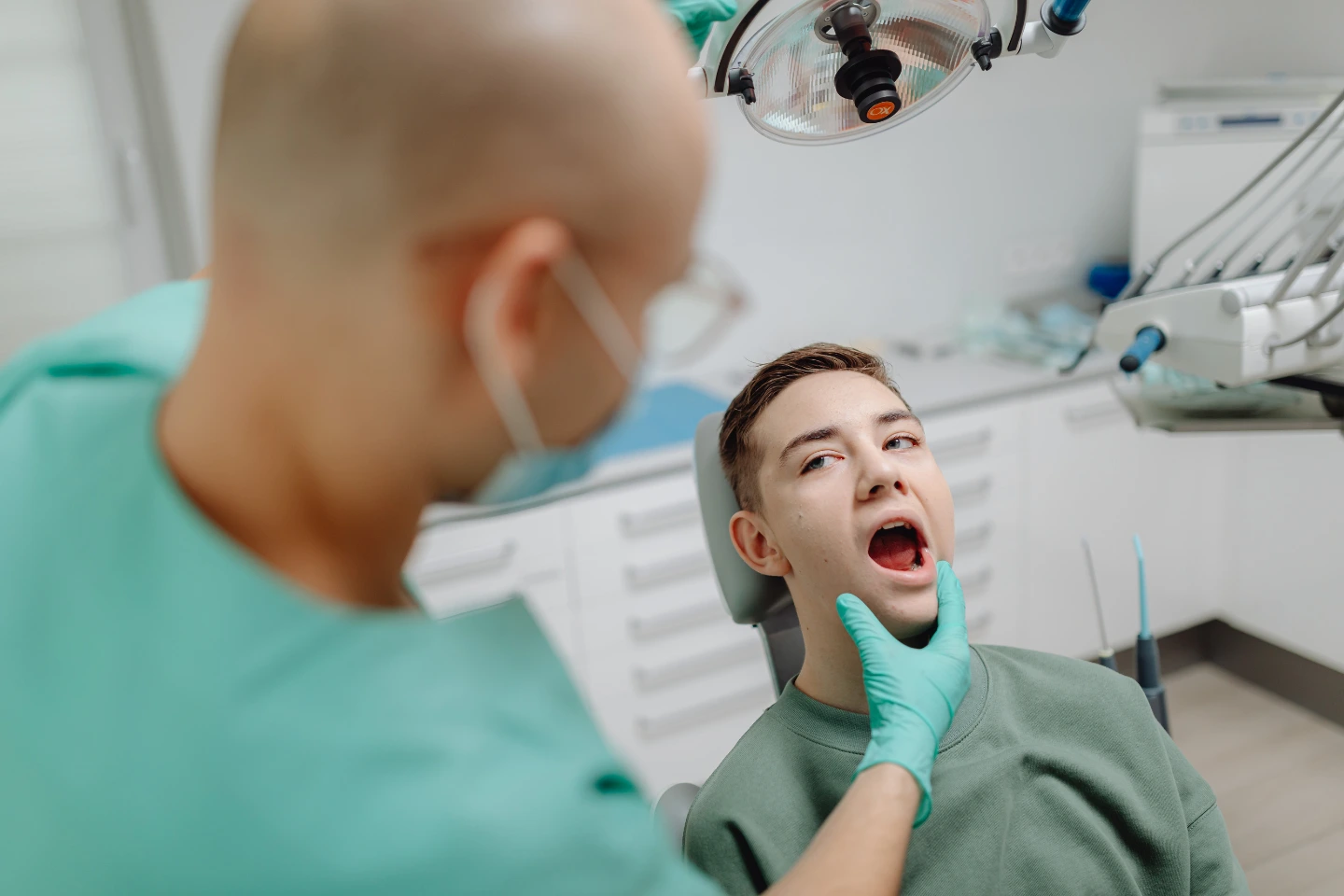
Your provider starts by examining the outside of your face, neck, and lips. They are scanning for any visible swellings, asymmetry, or odd surface lesions. From there, they use gloved fingers to gently feel the tissues under your jawline, trace down both sides of your neck, and check around your salivary glands. They are simply searching for any hidden firm lumps, nodules, or unusual tenderness that shouldn't be there.
Step 2: The Intraoral Visual Inspection
Next, your dentist uses a small dental mirror and a bright overhead light to systematically check the inside of your mouth. This isn't just a quick glance; it is a methodical walkthrough. They will examine:
- Your Lips and Cheeks: Pulling back the tissue to look for patches, sores, or changes in texture.
- Your Tongue: Asking you to stick your tongue out so they can inspect the top, bottom, and especially the sides, where abnormalities often try to hide.
- The Floor and Roof of Your Mouth: Lifting your tongue up to check the delicate tissues underneath, followed by a look at your hard and soft palates.
- The Back of Your Throat: Taking a quick look at your oropharynx to make sure everything looks healthy and clear.
Finding an odd spot during this exam doesn't automatically mean something is wrong. In fact, the vast majority of spots turn out to be harmless minor injuries, ordinary inflammation, or common canker sores. However, if a spot refuses to vanish on its own, your dentist might suggest keeping a close eye on it, running a specialized diagnostic rinse, or sending you to a specialist for a quick, simple biopsy just to rule out any risks.
Understanding Your Personal Risk Factors
While anyone can develop oral health complications, looking closely at medical data highlights a few specific lifestyle and environmental variables that tend to increase individual risk:
- Tobacco Habits: Cigarettes, cigars, pipes, and smokeless tobacco introduce harsh chemical irritants that disrupt healthy cell growth in oral tissues over time.
- Alcohol Consumption: Regular, heavy drinking combined with tobacco use creates a strongly compounding risk multiplier for cellular mutations.
- Ultraviolet Exposure: Spending hours out in the sun without protection increases the likelihood of developing lip cancer, which is why using a protective lip balm with SPF is a smart daily routine.
- HPV Exposure: Certain high risk strains of the human papillomavirus have become increasingly prominent factors behind cancers located in the back of the throat and tonsil regions.
Knowing these risk factors isn't meant to cause alarm; rather, it highlights why keeping up with routine professional checkups is such a smart choice. Your dental team reviews your health history at every visit to ensure your preventive care stays completely tailored to you.
Taking Action Between Dental Appointments
Your ongoing dental health relies heavily on a partnership between what happens in the dental chair and the habits you practice at home. Setting aside two minutes once a month for a quick self check can pay off immensely. Stand in front of a well lit mirror, take out any retainers or dentures, and visually check your gums, cheeks, tongue sides, and the roof of your mouth.
If you stumble upon a red or white patch that wasn't there last month, a sore that won't go away, or a firm lump, don't just ignore it and hope it clears up on its own. Jot down roughly when you first spotted it. If it lingers past the two week mark, call your dental office for a professional look. Peace of mind is always worth a quick phone call.
Protect Your Health For The Future
True preventive dental care is about so much more than just maintaining a bright, clean smile. It serves as an essential window into your whole body wellness. Setting aside time for routine checkups gives your care team the opportunity to spot hidden issues long before they escalate into major medical battles.
If it has been a while since your last cleaning, or if you've noticed a persistent sore or strange discomfort that's been lingering, there's no reason to wait it out. Reach out to the team at Palmer Dentistry & Implants to schedule your next checkup and comprehensive oral cancer screening in Palmer, MA.
Frequently Asked Questions
Q: Does an oral cancer screening hurt?
A: Not at all. The entire process is completely noninvasive and painless. It involves a straightforward visual look and a gentle physical check of your neck, jaw, and mouth tissues by your dentist.
Q: How often should I get screened for oral cancer?
A: For most adults, an oral cancer screening is performed automatically during every routine dental checkup, which are generally scheduled twice a year.
Q: What happens if my dentist finds an abnormal spot?
A: Discovering an unusual spot does not mean you have cancer. Most spots turn out to be harmless minor injuries, tissue irritation, or regular canker sores. If something looks out of the ordinary, your dentist will typically monitor it closely or recommend a simple referral for further evaluation to ensure your complete safety.


Hours
Monday to Friday: 10 a.m.–7 p.m.
Saturday: 9 a.m.–3 p.m.
Sunday: Closed
Disclaimer: We’re open until 7 p.m. on Mondays and Wednesdays – with flexible scheduling to fit your needs.




© 2026 Unident Dental Group | All Rights Reserved | Privacy Policy | HIPAA Policy | Digital Marketing By Remedo